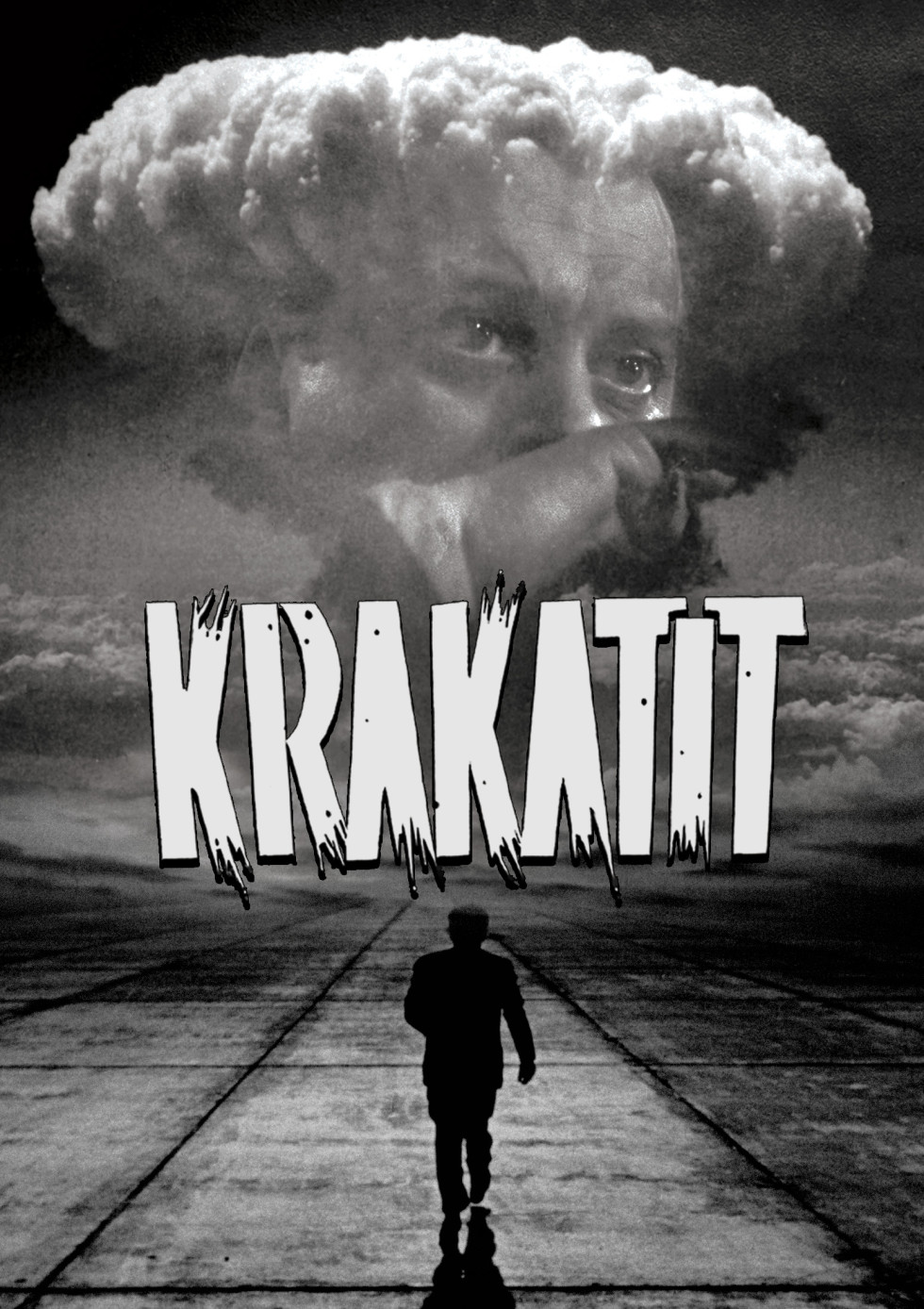
KRAKATIT, 1948, N.F.A., 101 min. "Long wandering," a voice whispers in the brain of a man staggering along a misty riverbank, the night as fog-shrouded as his shattered mind. Czech director Otakar Vávra's astonishing KRAKATIT is a literal fever dream of a movie that mixes 1940s Film Noir, paranoid thriller and speculative atomic-bomb Sci-Fi in the story of a chemist named Prokop who hallucinates fragments of how he's invented a proto-nuclear weapon -- and the mystery of what's happened to the formula for it. The film has overtones of Rudolph Maté's classic Noir D.O.A. (seriously-ill man racing against the clock), 1940s Orson Welles films like THE STRANGER and THE LADY FROM SHANGHAI (stunning deep-focus B&W photography, atmosphere of surreal paranoia), and Hitchcock's SPELLBOUND (distorted dream sequences). Karel Höger delivers an unforgettable performance in the lead, grasping at his own memories like a walking ghost. Based on a 1924 novel by famed sci-fi author Karel Čapek (who invented the word "robot" in his play R.U.R.), the film's unique structure of memories within memories within flashbacks are like Russian nesting dolls -- all shot by DOP Václav Hanuš in some of the most remarkable B&W images since NIGHT OF THE HUNTER. Long wandering, indeed. Beautifully restored in 4K by the Národní filmový archiv (NFA) in Prague in collaboration with the National Film Institute (NFI) in Hungary. Deaf Crocodile is thrilled to present the first-ever 4K UHD + Blu-ray release for this overlooked classic of Czech cinema and World Noir, co-presented with the Comeback Company. In Czech with English subtitles.
Format
Format
4K Ultra HD & Blu-Ray
Film
Year
1948
Rating
15
Director
Otakar Vávra
Starring
Karel Höger
Country
Czechoslovakia
Label
Deaf Crocodile
Region / TV Standard
Region 0
Language
Czech
Subtitles
English
Running time
101 mins
Aspect ratio
1.37:1
Case type
Standard
Extra features
New essay by Czech film scholar Jonathan Owen
New essay by film critic Walter Chaw
New visual essay by film scholar Clayton Dillard
Video interview on the film’s restoration w/ Tereza Frodlová, Restoration and Curatorship, Národní filmový archiv, Prague